Million Lords: World Conquest
MILLION VICTORIESStrategy
4.24.46K Reviews
- Version
- 5.21.0
- Installs
- 1.00M
- Age Rating
- Everyone 10+
Screenshots
Our Review of Million Lords: World Conquest
 Analysis by Appyee
I like strategy games that give me a meaningful decision before I’ve learned a long list of menus, and Million Lords: World Conquest gets to its central choice quickly: take ground, or work out how to keep the ground you already have. Its appeal is less about tending a miniature kingdom and more about judging where expansion is worth the risk. That gives each move a clear purpose, though it also means the experience depends heavily on whether you enjoy competition with other players.
On Android, this free strategy game comes from MILLION VICTORIES and is rated Everyone 10+. It has an average rating of 4.3 from around 82,000 ratings, with over a million installs. The current version is 5.15.1, and the game runs on Android 8.0 or later. Those details place it within reach of many players, but the more important question is whether its conquest-focused pace suits the way you like to play.
What the first goals ask of you
At the start, the aim is easy to understand: begin with a small territory and expand by taking land from rivals. I find that direct opening useful because it gives a new player an immediate decision to consider rather than burying the basic objective beneath a complicated base-building routine. The challenge is in deciding what an apparently simple expansion might cost you later.
That focus makes the game approachable for someone curious about strategy but put off by titles that ask for constant attention to construction queues and resource details. It is not the same as saying there is no learning curve. Instead, the learning is about reading the changing situation and choosing when to push, when to hold, and how much of your attention to give the wider contest.
How conquest, competition, and progress fit together
I use this section to connect the game’s territorial decisions with the reasons to keep playing: competition gives each expansion a consequence, while unlocks and standings can offer goals beyond the next move. The useful question is whether those signals help you choose a satisfying pace, or make the contest feel like a chore. From there, I can look more closely at how the game’s goals develop over time.
Gameplay Mechanics
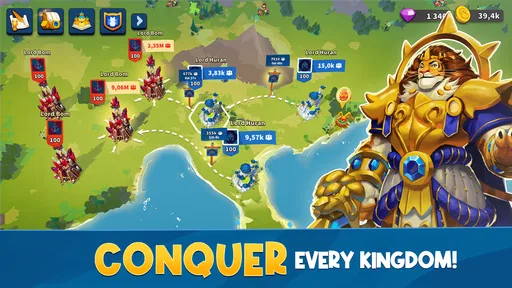
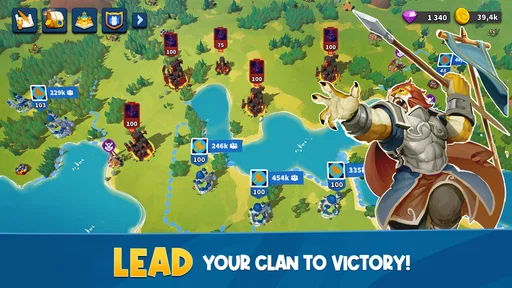
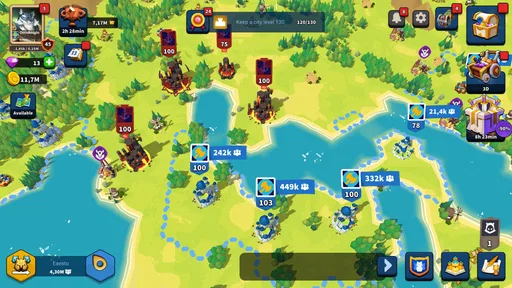
What I love about Million Lords is its emphasis on strategy over micromanagement. Unlike other strategy games where you might find yourself bogged down by resource management and endless building upgrades, Million Lords keeps things refreshingly simple. Your main focus is on conquering territories and defending your lands. The game’s minimalistic approach allows you to concentrate on strategic decision-making, which is both challenging and rewarding.
The battles are automated, which means you won't be controlling every single troop movement. Instead, the game relies on the strength and number of your army, along with your strategic planning. It’s a nice touch that keeps the action flowing without getting stuck in the minutiae.
For me, that automation changes what “being tactical” means here. I get more value from thinking about a decision before an attack than from expecting to rescue a battle with last-second commands. A practical habit is to pause before committing to a new target and ask whether taking it improves my position, or simply makes my territory harder to protect. That small check can be more useful than treating every available opponent as an invitation to attack.
It also helps to treat expansion as a sequence rather than a string of isolated wins. If I make a move, I want to consider what it leaves exposed and whether I can respond if another player challenges me. The game’s streamlined approach keeps those choices in view, but it does not remove their consequences. Players who want direct control over every unit in a battle may find the automated resolution too hands-off; those who prefer planning over fast inputs are more likely to appreciate it.
Multiplayer Dynamics
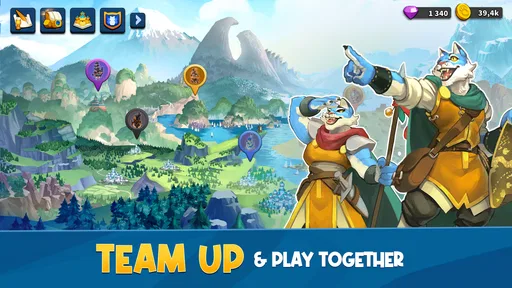
Million Lords is not just about solo play; it's an engaging multiplayer experience. You’ll encounter players from all over the world, and this adds a thrilling layer of unpredictability. You can form alliances or go head-to-head with other players, and trust me, the competition can get fierce. The social aspect of the game is well-developed, and it’s easy to communicate and strategize with allies, or taunt your enemies if that's more your style.
That human element is the biggest difference between this and a more solitary strategy game. A plan that looks sensible against a predictable opponent can become awkward when other players are making their own moves. Alliances can make coordination part of the challenge, but I would not approach them as a guarantee of safety: they are part of a competitive environment, not a replacement for thinking through my own position.
A useful way to play is to make communication serve a concrete purpose. Before asking allies to help, I would decide what I need from them and what I can contribute in return. That keeps social play tied to the map and the immediate strategic problem instead of turning it into conversation for its own sake. If you would rather play entirely alone, or find rivalry stressful, this multiplayer emphasis is a real reason to choose a different kind of strategy game.
Graphics and Sound
Visually, Million Lords has a clean and appealing design. The interface is intuitive, and everything is easy to navigate. The graphics aren’t ultra-realistic, but they have a charming, cartoony style that works well for this type of game. The sound effects and background music are subtle yet effective, enhancing the overall experience without being distracting.
That restrained presentation suits a game where I want to focus on territory and choices rather than admire a crowded battlefield. It is also a practical fit for checking the state of a campaign in a short session: the visual style does not compete with the central task of deciding what to do next. If your main reason for playing strategy games is detailed visual spectacle, though, the clean look may feel modest rather than immersive.
Progression and Development
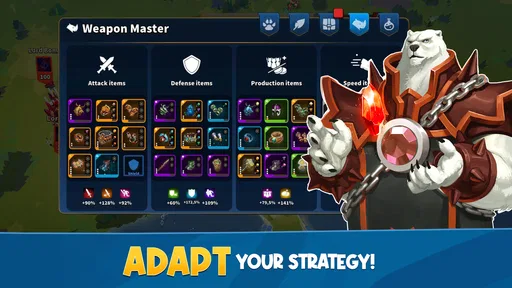
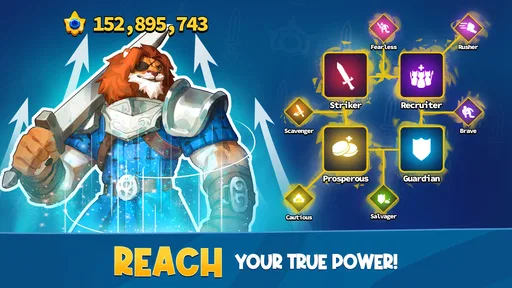
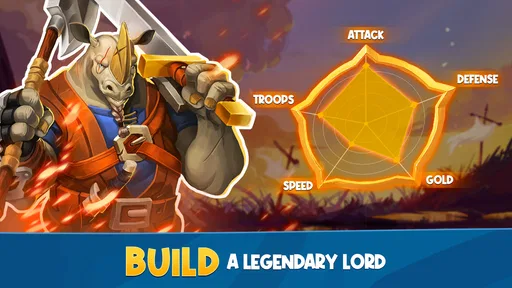
One of the most compelling aspects of Million Lords is its progression system. As you conquer more lands and gain experience, you’ll unlock new skills and abilities. This allows for some degree of customization in how you develop your kingdom and army, adding depth to the gameplay. The game also features seasonal events and leaderboards, giving you plenty of reasons to keep coming back and improving your standing.
These are useful progress signals because they give expansion more meaning than simply watching territory change hands. Unlocking a skill or ability gives me a reason to think about how I want to shape my approach, while events and standings can offer a longer-term target beyond the next attack. I would treat these as prompts, not obligations: a leaderboard is motivating if I enjoy measuring progress, but it can make a relaxed player feel as if every session must be about climbing.
For a more deliberate routine, I’d pick one near-term goal before opening the game—such as making a careful expansion or working toward an unlock—and judge the session by that choice rather than by how much map I cover. This is a small but important trade-off in a competitive strategy game: steady, considered progress can feel satisfying, while chasing every visible objective can turn play into a checklist. The game suits players who like goals that grow out of conquest, less so those who want a fixed story path to follow at their own pace.
The difficulty comes from the combination of automated battles and human opposition. Since I am not issuing individual commands during a fight, preparation and judgement carry more weight than frantic reactions. That creates a welcome sense of consequence, but it also means a poor decision can feel harder to correct once I have committed. Newcomers should expect to learn by noticing which choices leave them stretched thin, rather than expecting the game to make every outcome feel forgiving.
Keeping a campaign manageable
Million Lords works best for me in sessions where I can give the map and rival activity a little attention, then stop with a clear next step in mind. It can fit into an everyday routine—checking in during a break, choosing a limited objective, and returning later—provided I am comfortable with a multiplayer contest that continues to involve other people. I would not recommend starting a session when I only want a completely self-contained puzzle with no competitive context.
One useful way to avoid aimless play is to separate “I can attack this” from “I should attack this.” The first is an opportunity; the second requires a reason, such as improving my position or advancing a chosen goal. That distinction keeps the simple controls from making every available action feel equally worthwhile. It also gives me a natural stopping point: once I have made the decision I came for, I do not need to keep expanding just because I can.
How it compares with other strategy games
Compared with the familiar base-building strategy game, this one puts more weight on territory and less on repeatedly tending upgrades. Compared with a tactical battle game, its automated fights leave less room for moment-to-moment command. That makes it a good middle ground for someone who wants strategic choices without constant unit control, but a poor match for players who enjoy carefully arranging every battle or developing a settlement through layers of construction.
The multiplayer angle also distinguishes it from a campaign-led game designed around a predictable sequence of missions. Here, the appeal comes from reacting to a changing contest and deciding how to deal with other players. If I want a story I can complete at my own pace, a single-player strategy title is likely the better choice. If I want a lighter management workload and a more social contest over land, Million Lords has a clearer case.
Spending, access, and who should try it
The game is free to start, with in-app purchases ranging from $0.99 to $114.99 per item. I would go in with a personal spending limit rather than assume that a purchase is necessary or that every item will matter to my style of play. The core attraction is the strategic contest; the best test is whether I enjoy that loop before spending anything. Players who prefer a one-time purchase with no optional spending may be more comfortable choosing a paid alternative instead.
I would recommend it to someone who likes short, purposeful decisions, wants to compete with other players, and does not need to direct every unit during combat. I would steer away from it if I want a private, story-driven campaign, dislike the uncertainty of multiplayer, or find leaderboards more pressuring than motivating. Its Everyone 10+ rating gives families a useful starting point when considering age suitability, though I would still think about whether the competitive style is right for the individual player.
In-App Purchases
Like many free-to-play games, Million Lords does offer in-app purchases. These can speed up your progress or provide cosmetic upgrades. However, I found that the game is generous enough with its rewards that you don’t feel pressured to spend money to enjoy the core experience. It’s entirely possible to play and compete at a high level without making any purchases, which is a huge plus in my book.
Final Thoughts
So, is Million Lords worth your time? Absolutely. Whether you're a seasoned strategy game veteran or just looking for something new to try, this game offers a rich and engaging experience. Its focus on strategic gameplay over micromanagement is refreshing, and the multiplayer aspect adds endless replayability. Plus, it's always fun to see your empire grow and dominate the world stage.
If you’re ready to unleash your inner conqueror, give Million Lords a download and see how far you can expand your empire. Who knows, you might just become the next great ruler in the world of Million Lords!
Verdict
Strengths of Million Lords: World Conquest
- Engaging real-time strategy gameplay.
- Expansive multiplayer world to explore.
- Regular updates and new content.
- Intuitive user interface and controls.
- Strong community support and alliances.
Limitations of Million Lords: World Conquest
- Requires constant internet connection.
- In-app purchases can be expensive.
- Steep learning curve for beginners.
- Occasional server downtime issues.
- Graphics could be more polished.
Similar Picks in This Category
View All
Clash of Clans
Supercell4.5

Plants vs. Zombies™
ELECTRONIC ARTS3.7

Lords Mobile: Kingdom Wars
IGG.COM4.5

Clash Royale
Supercell4.4

State.io — Conquer the World
CASUAL AZUR GAMES4.1

Car Driving School : Car Games
Spark Game Studios3.9
Frequently Asked Questions
What is Million Lords: World Conquest about?
Million Lords: World Conquest is a strategic MMO game where players build and expand their kingdoms by conquering territories and battling other players. The game focuses on real-time strategy and territorial expansion, with an emphasis on multiplayer interaction. Players must manage resources, form alliances, and use strategic planning to dominate the world map.
Is Million Lords: World Conquest free to play?
Yes, Million Lords: World Conquest is free to download and play on both Android and iOS platforms. However, it offers in-app purchases that can enhance gameplay by providing additional resources or speeding up progress. Players can choose to make purchases, but it is not necessary to enjoy the core experience of the game.
What are the key features of Million Lords: World Conquest?
Million Lords: World Conquest features real-time multiplayer strategy, where players can engage in epic battles and territorial conquests. The game includes dynamic world maps, customizable kingdoms, and a ranking system that encourages competition. Additionally, players can form alliances to strengthen their power and participate in seasonal events for unique rewards.
How does the multiplayer aspect work in Million Lords: World Conquest?
In Million Lords: World Conquest, the multiplayer aspect is central to the gameplay. Players can attack other players' territories, defend their own, and form alliances for strategic advantages. The game also features leaderboards and seasonal rankings, encouraging competitive play and collaboration with other players worldwide to achieve dominance.
Are there any strategies to succeed in Million Lords: World Conquest?
Success in Million Lords: World Conquest involves strategic planning and resource management. Players should focus on expanding their territories wisely, forming strong alliances, and effectively managing their resources. Participating in events and keeping an eye on the global rankings can also provide competitive insights and additional rewards, enhancing the overall gameplay experience.
Play our best games!


